Project Location: Martinez, CA
General Contractor: C. Overaa & Co.
Electrical Partner: Con J. Franke Electric
Think about what happens after you flush the toilet, run the washing machine, or wash the dinner dishes. That wastewater flows through underground pipes to a local water reclamation facility—a massive industrial engine working 24 hours a day, 365 days a year to clean the water, protect public health, and return it safely back to the environment.
A wastewater treatment plant can’t simply take a weekend off. If it stops running, the entire community stops with it.
A wastewater treatment plant can’t simply take a weekend off. If it stops running, the entire community stops with it.
Right now, our team at Con J. Franke Electric is on-site at Central San’s Solids Conditioning Building in Martinez, California, performing the $25 million electrical scope for the Solids Handling Facility Improvements, Phase 1A. With a post-bid total project estimate near $200 million, this is one of the most complex, high-stakes industrial renovation projects in our company's history. We aren't just running wire—we are rebuilding the invisible electrical network that keeps this essential 24/7 service running smoothly for everyone who relies on it.
The Mission: What Does a Solids Handling Facility Do?
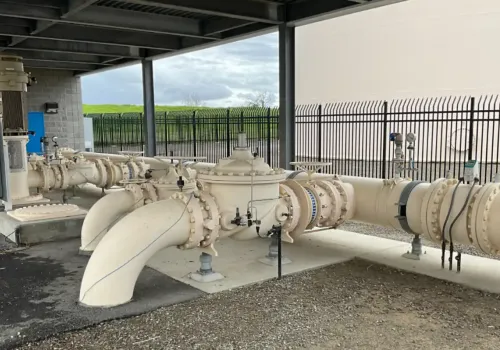
Inside Central San’s Solids Conditioning Building, two massive hearth furnaces process the solid materials left over from wastewater treatment. The facility also houses sludge-dewatering equipment, wet scrubbers, air-pollution control systems, ash handling, natural-gas cogeneration, steam generation, and auxiliary boilers.
While the giant furnaces still have plenty of life left in them, the heavy equipment supporting them has been working non-stop for decades. In fact, four centrifuges (which squeeze water out of the sludge) and four cake pumps (which move that material to the furnaces) have been running continuously for over 40 years!
Our mission is to build the modern electrical foundation for brand-new, energy-efficient replacements. Once the solids process through the upgraded systems and furnaces, the resulting ash is repurposed for environmentally friendly agricultural reuse as a soil amendment. Our work ensures Central San can continue this vital process safely, reliably, and in full compliance with environmental standards for years to come.
Built to Scale: The Project by the Numbers
The sheer scale of this job is incredible. Our crews are managing complex installations across every layer of the electrical scope:
Six new Motor Control Centers (MCCs) — giant electrical distribution panels rated up to 2,000 amps that act as the master control hub for motors and equipment throughout the plant.
A fiberglass-reinforced modular building — a custom, corrosion-resistant building built specifically to house two of the new MCCs safely.
Wiring for ~160 furnace burners — providing precise power and combustion controls to about 80 burners on each of the two retrofitted furnaces.
Powering heavy machinery — running electrical connections for four replacement centrifuges, four new cake pumps, wet scrubbers, dampers, valves, pumps, and field instruments.
Connected digital controls — linking PLC panels, remote input/output devices, and fiber-optic lines to an upgraded Supervisory Control and Data Acquisition (SCADA) network that gives operators centralized, real-time visibility over the entire site.
From heavy-duty conduits and conductors to sensitive control lines, every connection must be installed, identified, and tested with absolute precision.
The Ultimate Challenge: Renovating What Cannot Be Turned Off
Here is what separates a project like this from standard commercial construction: Central San never stops operating.
An earlier plan for this project considered an 18-month complete shutdown of the solids process, which would have meant temporary dewatering and hauling sludge off-site in trucks. To save massive time and hassle for the facility and the community, Phase 1A was redesigned to keep the plant operating continuously—squeezing the total allowable process outage down to just one carefully planned 21-day window.
That means there is zero room for uncertainty when the clock starts ticking.
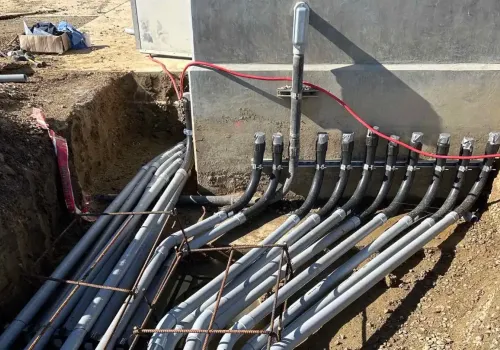
Before a scheduled shutdown, our crews do extensive preparation behind the scenes. We install raceways, pull and stage conductors, set new equipment, and verify existing circuits. When the 21-day outage window opens, our electricians work around the clock to safely disconnect legacy systems, tie in the new infrastructure, test every loop, and prepare the facility for startup.
Investigating Decades of Hidden Infrastructure
Working inside an active facility that has evolved over 40-plus years always brings surprises. Blueprints from decades ago don't always match what is hidden behind the walls or under the floors today.
Early on, our team conducted a forensic electrical investigation—tracing hidden conduits, outdated wiring, abandoned systems, and control loops to document what was still active. Uncovering these conditions early allowed us to create safer demolition plans, arrange temporary power, and map out smooth cutover procedures.
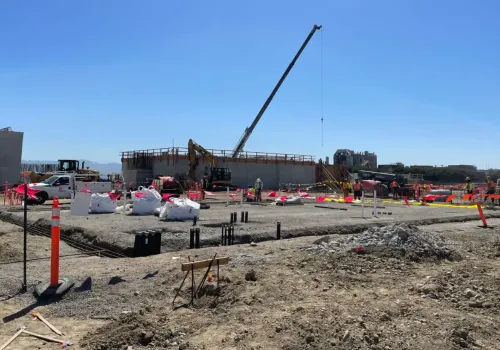
At the same time, the facility is undergoing major structural and seismic improvements, including exterior concrete buttresses, pile foundations, and interior steel bracing. Installing these massive supports creates constant physical puzzles with existing electrical routes. Our team works daily to support, move, or reroute live lines so structural crews can reinforce the building without disrupting plant power.
Planning for the Unexpected & Teamwork in Action
Projects of this scale naturally evolve. As field conditions change—whether it’s adjusting conduit routes around utility conflicts, modifying ductwork supports, or adding extra weather protection for electrical enclosures—our office and field teams evaluate how every small tweak affects the entire system.
More than 25 Con J. Franke Electric employees have contributed to this project across estimating, procurement, project management, field supervision, and craft labor. Our work goes far beyond installing materials; it takes daily, hands-on coordination with general contractor C. Overaa & Co., design engineers, equipment manufacturers, and Central San’s veteran plant operators who know the facility inside and out.
Extending the Life of Critical Infrastructure
By upgrading aging equipment and installing modern electrical systems, Phase 1A is expected to extend the reliable operation of the facility's incineration process for at least another 15 years.
Modernizing decades-old infrastructure, integrating advanced digital controls, and executing a high-stakes cutover inside a 24/7 plant requires a special level of expertise. It takes the discipline, skill, and deep industry knowledge that Con J. Franke Electric has built over a century of serving California's essential infrastructure. When the stakes are highest and the power simply cannot fail, this is the work we were built to do.